How Dubai’s safe-haven status is being put to the test
For decades, Dubai’s sales pitch featured gleaming skylines, tax-free salaries, ease of doing business and something far more intangible: the unspoken promise that whatever was happening elsewhere in the Middle East, this city was different. The conflicts that destabilised the region would somehow stop at Dubai’s borders.
On Saturday, that all changed. Iran’s retaliatory strikes across the Gulf hit across Dubai’s key sectors, landing on airports, hotels and ports. They also hit the psychological foundations of a city that had spent four decades constructing that identity as one of the world’s most reliable places to do business in an unreliable neighbourhood.
Authorities in the UAE, a close US ally, moved quickly to contain the damage to confidence as much as the physical fallout. The UAE’s National Emergency, Crisis and Disasters Management Authority said the situation remained under control. For investors and residents watching their landmarks hit by missiles, as they stockpiled supplies, the reassurances were noted. Whether they were enough is another question.
“It’s hard to overstate the peril for Dubai’s economic model,” said Jim Krane, a fellow at Rice University’s Baker Institute.
“The physical damage may be slight, and most of the pain thus far is psychological. But Dubai’s status as a safe-haven for expatriates and their businesses is in increasing doubt. The longer the war continues, the more intense the search will be for alternative locations. Dubai needs this war to wrap up now. International capital is highly mobile.”
In a sign of the ongoing strains, the UAE’s stock markets were closed on Monday and Tuesday, while tech outages following a hit to Amazon’s cloud computing facilities were affecting some banking operations, according to a person familiar with the situation. Tens of thousands remained stranded in the UAE as airspaces remained largely closed.
HOW DUBAI BUILT THE BRAND
Dubai’s transformation from a modest pearling and fishing port into a global financial centre was a decades-long project. The launch of Emirates airline in 1985, the opening of the Burj Al Arab in 1999 and laws in the early 2000s allowing foreigners to own property for the first time were the pillars of Brand Dubai.
Dubai’s economy is almost fully powered by non-oil sectors, with oil now accounting for less than 2% of GDP. A mix of trade, tourism, high-end real estate and financial services, built on a regulatory framework that mirrored London and New York, has replaced it. Neighbouring Abu Dhabi, which holds more than 90% of the UAE’s oil reserves, remains more reliant on oil revenue for growth.
Beirut had been the region’s international financial capital until its civil war in the 1970s shattered that image. Bahrain stepped into the vacuum until Dubai’s rise rendered it a more modest player. Each succession was built on the same promise: a stable, open alternative to wherever the region’s last crisis struck. Dubai executed that promise more completely than any of its predecessors.
Dubai’s rise was itself partly built on the instability of others. With Syrians displaced by civil conflict, wealthy families rattled by the Arab Spring, and more recently Russians fleeing because of the Ukraine war, new residents all poured capital and talent into the emirate.
The population across the UAE ballooned, from about 1 million in 1980 to 11 million in 2024. Last year, the UAE was on track to attract a record 9,800 relocating millionaires, more than any other country on earth, according to Henley & Partners. Money has poured into real estate, propelling Dubai’s developer Emaar Properties to a record high on February 25, valuing the company at about 149 billion dirhams ($40.6 billion).
The creation of the Dubai International Financial Centre (DIFC) in 2004 kickstarted a push to draw financial firms. By the end of 2025, DIFC hosted more than 290 banks, 102 hedge funds, 500 wealth management firms and 1,289 family-related entities.
WHAT SATURDAY CHANGED
But vulnerabilities have remained. The Strait of Hormuz, through which roughly a fifth of the world’s seaborne crude oil passes, runs through Dubai’s backyard. Iran, a country with both the motive and the capability to destabilise Gulf commerce, sits directly across the water.
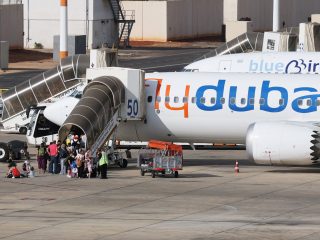
The physical damage over the weekend was stark. Dubai International Airport was hit, a berth at Jebel Ali Port caught fire and the Burj Al Arab sustained damage from interceptor fragments. Three people were killed and 58 injured, according to the UAE Ministry of Defence.
“People are afraid of what’s happening. It’s the first time they have to hide in underground places. Dubai airport, one of the biggest in the world, has to shut down for a few days,” said Nabil Milali, multi-asset portfolio manager at Edmond de Rothschild Asset Management. He reduced the firm’s exposure to stocks globally last week to prepare for the possibility of an attack on Iran.
“There’s a 70% probability we will keep a geopolitical risk premia (on the region) for a long time.”
A source at a UAE-based mid-sized investment firm said their company had begun preemptively planning layoffs and halted fundraising. Demand for gold bars surged, a jewelry industry source said. International private banks, which had been expanding advisory operations in the emirate, may also reassess the scope of their presence, according to a private banker. Firms may begin to rethink serving clients locally versus from another location, the banker said.
“Historically, markets like the UAE have demonstrated resilience during crises, including COVID, supported by strong policy response and governance,” said Madhur Kakkar, founder and CEO of Elevate Financial Services.
“At this stage, a broad structural reallocation of institutional capital away from the UAE or the wider Gulf appears unlikely unless tensions escalate materially or persist for an extended period.”
There is no data yet on capital outflows. The suspension of trading on the Abu Dhabi and Dubai stock exchanges on March 2 and 3 marks an unprecedented step for UAE regulators.
“It’s really quite a big change in perceptions,” said William Jackson, chief emerging markets economist at Capital Economics. “The Gulf economies have generally been seen as safe from Iranian retaliation. I think (that) has really changed over the weekend.”
The impact will depend on how long the conflict continues, he said. “But I think this is quite a big challenge, particularly when we’re thinking about some of the diversification efforts that are underway in the region.”
Shows
See AllAM Live
AM Live is NTV's morning current affairs show that sets the agenda for the day with insightful panels every weekday.
Business Redefined
Business Redefined is Kenya’s premier thought leadership platform for unpacking matters regarding economic and finance policy as well demystifying complex developments in the region’s capital markets.
Comedies
A collection of our premium content. Diam curabitur vehicula A collection of our premium content. Diam curabitur vehicula
Creatives & Coins Podcast
A podcast that dives deep into the vibrant and rapidly evolving digital creative economy in Kenya. This show explores the lives, challenges, and triumphs of individuals who are successfully navigating the gig and creative economies. From digital artists and content creators to freelance writers and tech entrepreneurs, we spotlight the voices that are shaping the future of work in Kenya.
Documentaries
A collection of our premium content. Diam curabitur vehicula A collection of our premium content. Diam curabitur vehicula
Entertainment
A collection of our premium content. Diam curabitur vehicula A collection of our premium content. Diam curabitur vehicula
Fixing The Nation
Fixing the Nation is a bold and groundbreaking show that will take an unflinching look at challenges facing the Kenyan society and the solutions that can move us forward. It is anchored by respected journalists Eric Lattif, Janet Mbugua, and Mariam Bishar. Podcast created by: Nation FM
Fixing the Nation
Fixing the Nation is a bold and groundbreaking show that will take an unflinching look at challenges facing the Kenyan society and the solutions that can move us forward. It is anchored by respected journalists Eric Lattif, Janet Mbugua, and Mariam Bishar
Full Episodes
A collection of our premium content. Diam curabitur vehicula A collection of our premium content. Diam curabitur vehicula
Gumzo La Sato
Gumzo La Sato is a live social issues show that aims to create awareness about issues affecting the larger society. The discussions range from Parenting, Marital bliss and struggles, Oppression, violence, and all matters of the Heart.
Health Diary
Health Diary is a weekly show that highlights different types of diseases/conditions and seeks ways to prevent, treat/manage them. The show debunks this through real life stories and also feature specialists in different fields, to offer medical advice on the same.
Letter To My Younger Self
Letter To My Younger Self is a podcast where guests get to write a letter to their younger self, from which Maxine formulates questions to ask them during the hour-long show.
Lunch N Rants
Take a minute outside your schedule to have a good laugh and conversations that resonate with you. Welcome to Lunch N Rant podcast where we talk about anything and everything life.
Nation Reports
Nation Reports is a weekly podcast offers an opportunity for listeners to interact with various reporters and journey with them as they unravel the biggest most emotive stories.
One Health Lens Podcast
Discussing health matters and human stories from Kenya and across Africa. We talk big picture from people to policy, ecosystems, and everything in between. Follow us on LinkedIn: https://www.linkedin.com/company/onehealthlens
Paradise Lost
Paradise Lost peeks through the story of Louis Otieno, the times, and everything in between.
Primetime
A collection of our premium content. Diam curabitur vehicula A collection of our premium content. Diam curabitur vehicula
Speaking of GEN Z
Speaking of Gen Z brings you entertaining but meaningful conversations about a generation that is trying to navigate through adulthood. Join hosts Michelle, Jackie and Esther as they unravel all things Gen Z.
Sport On
Sport-On is a 30-minute sports magazine show on NTV and 3 hours on NATION FM. The show seeks to give the sports “fanatics” and “funatics” comprehensive and in-depth coverage of sports both locally and internationally.
Tech-over
The extent of technological growth is beyond mere acknowledgment; it has seamlessly integrated into our daily existence. A few years ago, the notion of paying electricity bills through mobile money or recharging with 'tokens' in Kenya seemed inconceivable. Online product sales were considered distant, and artificial intelligence is rapidly reshaping various facets of our lives. Amidst these technological leaps, those with a solid understanding of tech can navigate challenges, seize opportunities, and build a sustainable livelihood. Tech over Show aims to be the platform facilitating discussions among thought leaders, innovators, tech companies, and the government, addressing challenges and opportunities in Kenya's thriving tech industry.
Thamani
Thamani is a business show which is dedicated to emerging issues regarding micro, small and medium size businesses.
The Politalk podcast
This is The Politalk podcast. Here we look into the ins and outs of everything Kenyan politics. We pull no punches and have no reason to sugarcoat anything that matters to Kenyans.
The Trend
A two-hour-long live show that airs on Fridays. The show focuses on what is current in the entertainment industry, controversial and popular across all media platforms targeting those aged between 25 and 35 years.
The trend podcast
The trend podcast highlights and captures the best of banter from #TTTT segment that airs every Friday on NTV. It's the TTTT EXTRA
The Wicked Edition
The Wicked Edition with Dr. King’ori seeks to address serious issues through humour and relatable wit. It is a two-part half hour show filmed in front of a live audience
Trending
A collection of our premium content. Diam curabitur vehicula A collection of our premium content. Diam curabitur vehicula
Twende
Twende is a travel show that highlights beautiful, unique, diverse locations, people, and cultures. The show offers fresh perspectives on familiar locations and memorable experiences in new ones.
Unscripted
This Saturday evening lifestyle show lets viewers share their stories and life experiences as openly & honestly for the purpose of shifting the culture of silence.
VIP Access
VIP ACCESS is Anyiko Owoko’s YouTube and podcast show on Music and Culture dedicated to promoting Africa’s most promising talent and creatives. This podcast grants you VIP access into timeless interviews while providing a platform for rising as well as established artists across the continent. Since launching in 2018, Anyiko has interviewed over 70 African music stars.
WADR
This weekly news show aims to have all sides of debate but not be constrained by it, listen to main voices in the contest but not allow them to hold the viewers hostage, entertain debate but allow push back with all due respect.
When death do us part
In this podcast, three widowers openly speak about the process of grief, how they found themselves exposed to the emotional turmoil of losing their wives, and how society still does not know how to deal with them.
Your World
Your World is a health, wellness and variety show. It provides a platform for audiences and experts to share their experiences on how to improve or manage health issues, across Kenya and the Africa region.