
US aid cuts disrupt life-saving treatment for starving children in parts of Kenya
Hellen Etiman, a Kenyan pastoralist, believed her severely malnourished son would soon recover after starting a course of life-saving specialised food.
Instead, 4-year-old Peter Lokoyen relapsed in July when the health facility treating him ran out of supplies, leaving the family to rely on wild fruit foraged in the barren plains of Turkana county, in the country’s northwest.
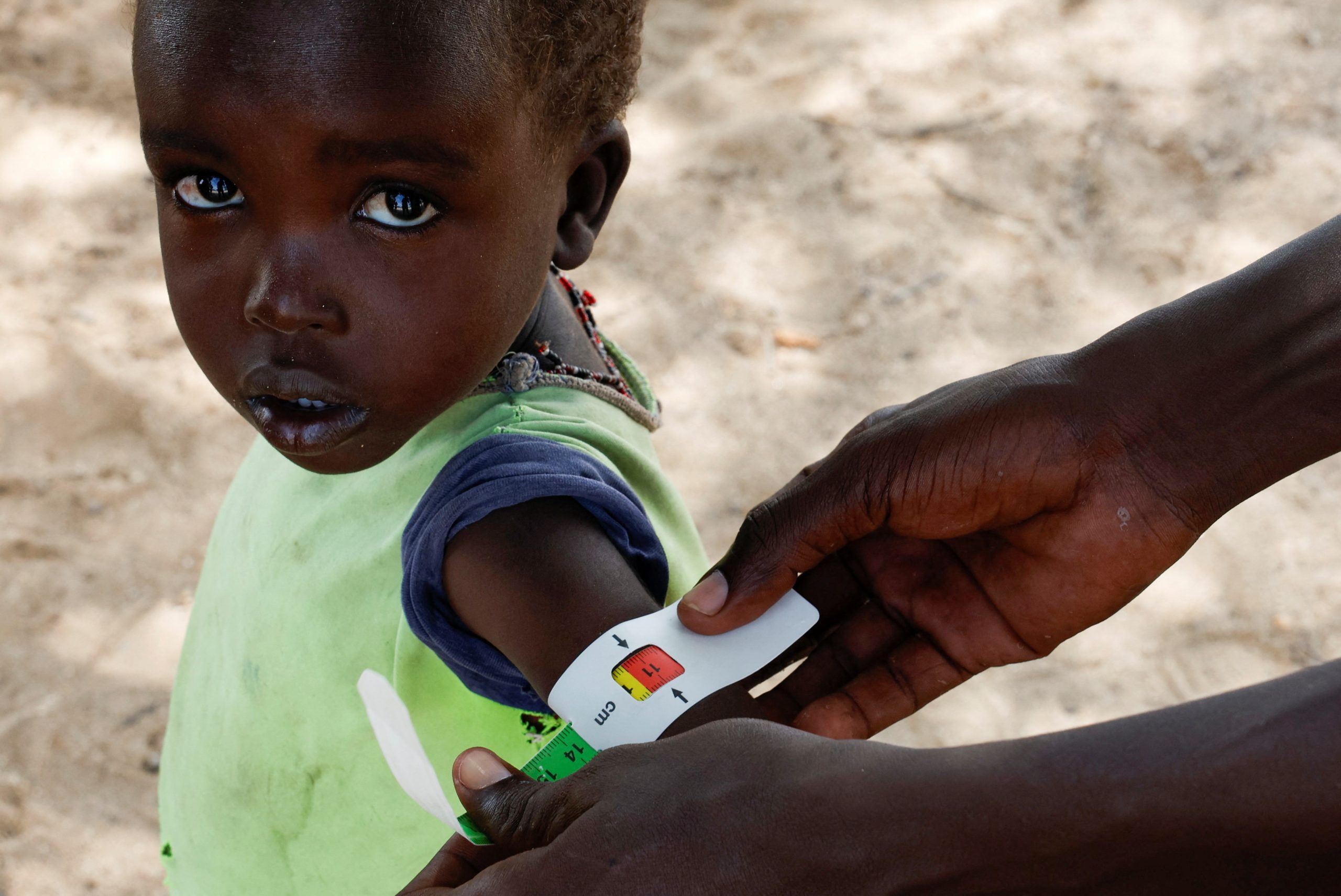
By late October, he weighed 11.4 kg (25.13 lb) – a third less than the median for boys his age listed by the World Health Organization – and measured just over 87 cm (2.85 ft). His 20-month-old sister, Melvine, was nearly as tall as he was.
President Donald Trump’s decision to dismantle the US Agency for International Development and slash global aid programmes severed a lifeline for children like Peter, five current and former aid officials told Reuters.
The US agency was funding the purchase and distribution of roughly half the world’s supply of ready-to-use therapeutic food (RUTF), a nutrient-dense, peanut-based paste used to treat children with the most lethal form of undernourishment, known as severe acute malnutrition or wasting.
UNICEF, the world’s largest buyer and distributor of RUTF, said drought was increasing demand for the nutritious paste in parts of Kenya, while funding cuts for community outreach to screen for malnutrition meant children were reaching health facilities in more critical condition.
Most of its funding for RUTF supplies was restored in March, the UN children’s agency told Reuters, saying shortages at some facilities were related to “short-term operational issues”.
EMPTY CLINIC SHELVES
However, health workers and aid officials in Turkana said it was taking time for the supply pipeline to recover.
At the end of October, Reuters journalists found shelves were largely empty of the peanut paste at all seven clinics they visited in the county, where recurring drought, intermittent conflict between feuding pastoralists and a recent locust infestation are driving hunger.
Kenya is East Africa’s most advanced economy and a refuge for people fleeing conflicts including in Somalia and Sudan.
“If this can happen in Kenya, it raises serious concerns about what’s ahead for countries already facing greater instability,” said Melaku Yirga, Africa director at Mercy Corps, a US-funded non-profit.
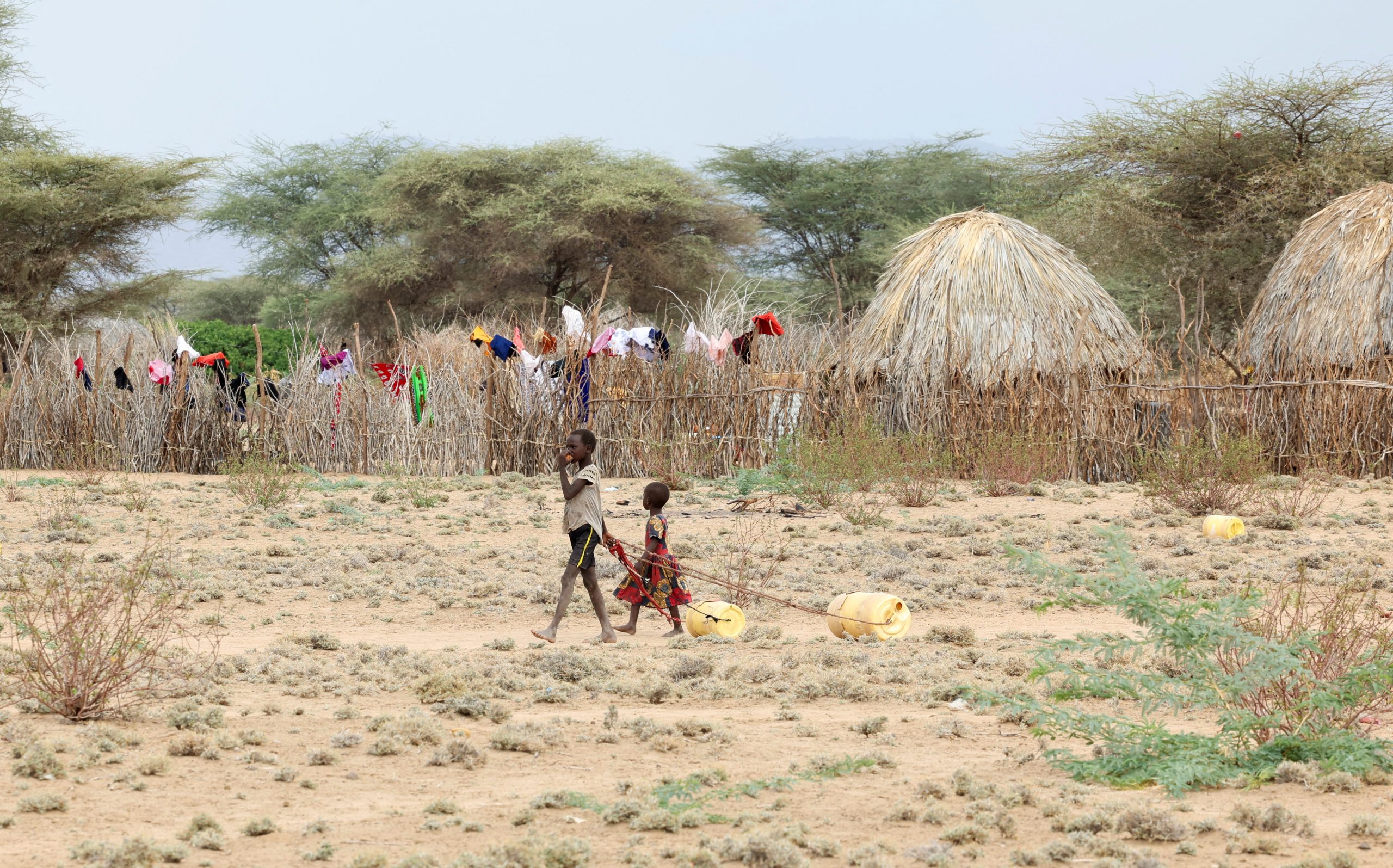
UNICEF recently delivered supplies to four of the facilities visited by Reuters, and three are awaiting deliveries from government-run aid hubs, the UN children’s agency said in a statement to Reuters.
But for some children, help may be too late to avoid lifelong physical and cognitive damage, Yirga said.
“When a severely malnourished child goes months without RUTF, the health consequences can be severe and sometimes irreversible — stunted growth, weakened immunity, impaired brain development,” he said.
“These treatment gaps don’t just slow recovery — they put children’s lives in real danger, and for some, by the time treatment resumes, the window for saving their lives may have already closed.”
Aid groups including Mercy Corps and Action Against Hunger have reported a handful of deaths among malnourished children whose parents were unable to access treatment in Democratic Republic of Congo and Nigeria when US-funded programmes were halted following Trump’s Jan. 20 executive order suspending foreign assistance pending a 90-day review.
Trump has said the US pays disproportionately for foreign aid, and he wants other countries to assume more of the burden. Britain, France, Germany, the Netherlands and Sweden have also scaled back aid in recent years to focus on domestic priorities.
US Secretary of State Marco Rubio has repeatedly denied anyone died as a result of the US cuts.
Responding to questions from Reuters, the US State Department said Washington is addressing global malnutrition and food insecurity, including supporting life-saving interventions for children with severe acute malnutrition.
In August, the department announced it would provide an additional $93 million to UNICEF to procure and distribute RUTF for nearly a million children in 13 countries, including Kenya.
“Our support is intended to enable Kenya and partners to meet their needs, not replace local and regional responsibility,” the department said. “Progress hinges on leadership and investment from Kenyan and regional authorities and other contributors.”
Kenya’s health ministry did not comment on the State Department’s remarks or the impact of aid cuts on efforts to fight malnutrition.
UNPRECEDENTED SHORTAGES
Around 179,000 people are experiencing emergency levels of hunger in Kenya, most of them concentrated in four arid counties, including Turkana, according to the Integrated Food Security Phase Classification system, the main global hunger monitor.
It estimated in September that over 87,200 children under 5 would need treatment for acute malnutrition in Turkana alone between April 2025 and March 2026, including 17,000 with severe wasting.
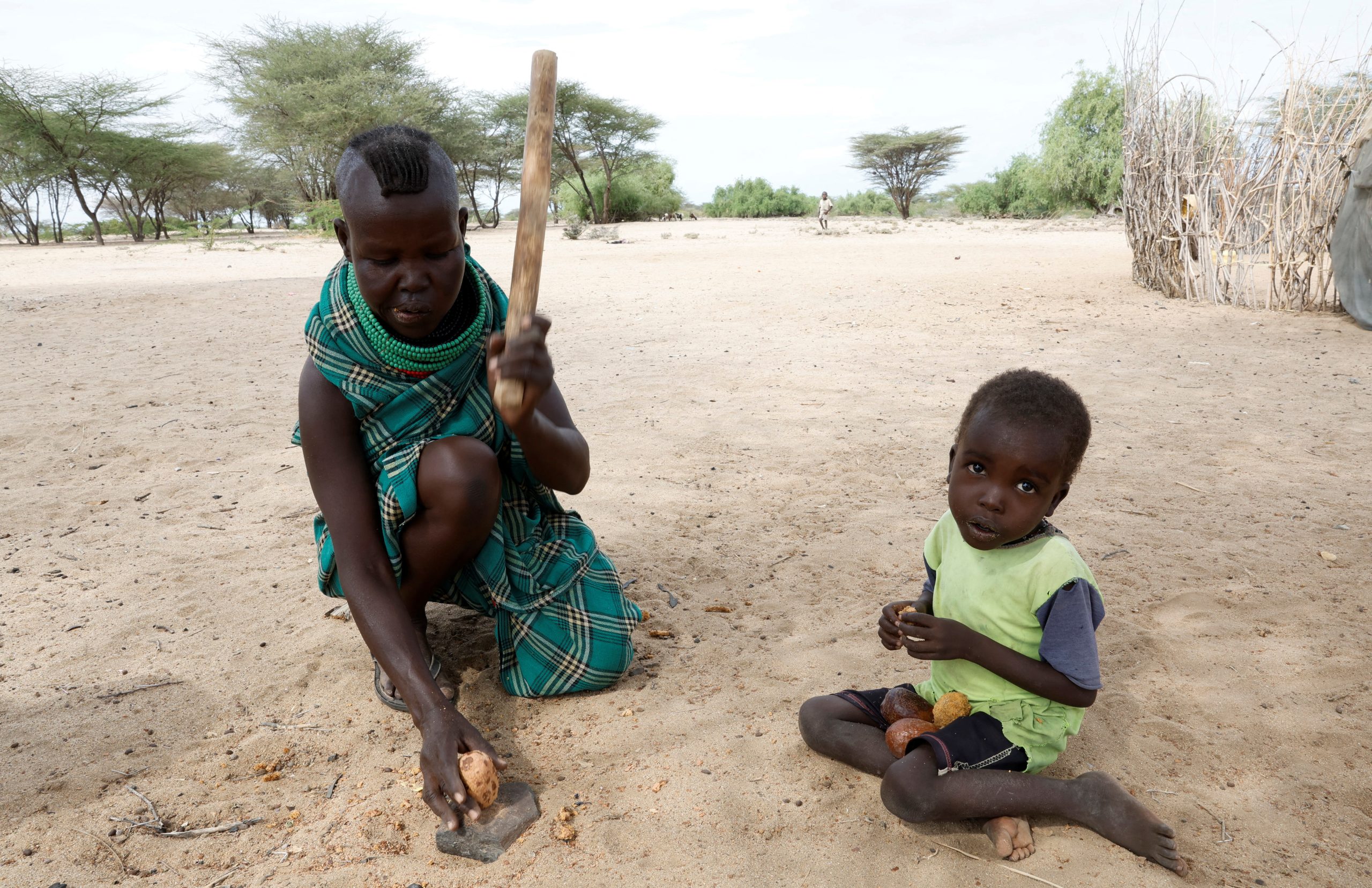
Peter’s mother, Etiman, said years of drought decimated the family’s goat herd, leaving her struggling to feed her five children.
A pile of ashes in their thatch hut in Lomolem village testified to what stood in for the family’s last hot meal – a pot of tea 36 hours earlier. Nearby, Etiman, 30, had stashed emergency supplies of gingerbread fruit.
As she smashed open the hard peel to extract the edible fruit, Peter stirred for the first time in two hours, determined to eat his share of the meagre meal.
Etiman realised something was wrong in March, when the once lively toddler began sleeping for long periods during the day. She took him to the nearest health facility in Kangatosa – an hour’s walk each way – where a nutritionist prescribed a course of RUTF.
The simple regimen – at least two packets of peanut paste a day for between six weeks and three months – has proven highly effective at treating severe wasting in children under 5.
Together with screening campaigns and follow-up home visits, therapeutic foods helped reduce mortality among children under 5 from around 115 deaths per 1,000 live births in 2003 to 41 in 2022 in Kenya, according to government statistics.
But when Etiman returned to Kangatosa in June to collect her weekly supply, the clinic had run out. By the time an outreach team arrived at her home in late October to check Peter’s measurements, the emaciated boy showed signs of stunting, a largely irreversible condition in young children.
“Every day he gets weaker and less active,” Etiman said. “I feel like there is no hope of him getting better.”
At four of the clinics Reuters visited, health workers said they had been operating without any RUTF for at least three months. Three other facilities had roughly 300 packets between them, enough to treat two or three severely malnourished children.
As a result, parents had stopped bringing in children or attending screening programmes, making it difficult to estimate the scale of the crisis, the health workers said.
Reuters interviewed five Kenyan health workers, a current aid worker and a former UNICEF official who were in Turkana during previous droughts. All said the current shortages were unprecedented.
In Aposta village, nutritionist Khadija Ahmed said the empty benches in her clinic’s waiting area filled her with despair. She had gone seven months without RUTF packets to offer her patients.
In March, Ahmed treated a 6-month-old boy, Ebei Eleman, for severe acute malnutrition. As he quickly recovered, his 4-year-old sister, Areng, fell ill but could not access the peanut paste for long. She remains severely malnourished.
“How will I save these children?” Ahmed asked.
FUNDING CUTS
Trump’s executive order caused disruptions around the world to the supply of food aid, Reuters has reported. Contracts to manufacture and deliver RUTF were abruptly suspended or cancelled because funds needed to pay suppliers were frozen.
UNICEF told Reuters supplies did not run out in Kenya, saying “buffer stocks” were used until funding was reinstated.
The temporary “stockouts” at some facilities were due to supplies being used up during community outreach campaigns or hit by issues including transport challenges and difficulties forecasting need, the agency said.
UNICEF-supported programmes to screen for malnutrition have been discontinued because of funding cuts, it said.
As of August, mass screening programmes covered fewer than 15% of malnutrition hotspots in Kenya, down from 75% in 2023, according to a health ministry PowerPoint presentation shared with humanitarian partners and verified by two aid sources.
The US remains the single biggest funder of global nutrition programmes but has contributed just under $263 million so far this year, according to the UN humanitarian agency OCHA. In 2024, it contributed $991 million.
Mercy Corps said it had to terminate 42 programmes that support communities facing growing food insecurity, water scarcity and acute malnutrition in countries including Congo, Nigeria, Somalia and Sudan.
In November, the State Department notified Mercy Corps that it would halt all remaining funding for a programme aimed at reducing malnutrition among 600,000 households in northern Kenya, the group said.
Global funding for the World Food Programme (WFP) plunged 40%, from $9.8 billion in 2024 to a projected $6.4 billion in 2025, the UN agency said in October.
In Kenya, a 30% drop in anticipated contributions forced WFP to slash food rations and suspend cash-based transfers to over 700,000 refugees over the summer, it said.
Supplemental food programmes for children experiencing moderate acute malnutrition were suspended in seven out of 10 counties, reaching just 17,000 of the 100,000 children targeted, it said.
The health ministry presentation seen by Reuters said Kenya expects to have enough RUTF to meet its needs through January, nearly all sourced through UNICEF.
About $5 million from the US grant announced in August will go to Kenya, UNICEF said. It did not provide details about current stocks but said its pipeline is projected to last until June.
In November, the Kangatosa clinic received its first seven boxes of peanut paste since June.
Peter Tuluke, the nutritionist in charge, said Etiman’s son has resumed treatment. But in the three weeks since he was last weighed, the boy had lost over 10% of his body weight following a bout of malaria.
On November 21, Peter weighed 9.9 kg.

Shows
See AllAM Live
AM Live is NTV's morning current affairs show that sets the agenda for the day with insightful panels every weekday.
Business Redefined
Business Redefined is Kenya’s premier thought leadership platform for unpacking matters regarding economic and finance policy as well demystifying complex developments in the region’s capital markets.
Comedies
A collection of our premium content. Diam curabitur vehicula A collection of our premium content. Diam curabitur vehicula
Creatives & Coins Podcast
A podcast that dives deep into the vibrant and rapidly evolving digital creative economy in Kenya. This show explores the lives, challenges, and triumphs of individuals who are successfully navigating the gig and creative economies. From digital artists and content creators to freelance writers and tech entrepreneurs, we spotlight the voices that are shaping the future of work in Kenya.
Documentaries
A collection of our premium content. Diam curabitur vehicula A collection of our premium content. Diam curabitur vehicula
Entertainment
A collection of our premium content. Diam curabitur vehicula A collection of our premium content. Diam curabitur vehicula
Fixing The Nation
Fixing the Nation is a bold and groundbreaking show that will take an unflinching look at challenges facing the Kenyan society and the solutions that can move us forward. It is anchored by respected journalists Eric Lattif, Janet Mbugua, and Mariam Bishar. Podcast created by: Nation FM
Fixing the Nation
Fixing the Nation is a bold and groundbreaking show that will take an unflinching look at challenges facing the Kenyan society and the solutions that can move us forward. It is anchored by respected journalists Eric Lattif, Janet Mbugua, and Mariam Bishar
Full Episodes
A collection of our premium content. Diam curabitur vehicula A collection of our premium content. Diam curabitur vehicula
Gumzo La Sato
Gumzo La Sato is a live social issues show that aims to create awareness about issues affecting the larger society. The discussions range from Parenting, Marital bliss and struggles, Oppression, violence, and all matters of the Heart.
Health Diary
Health Diary is a weekly show that highlights different types of diseases/conditions and seeks ways to prevent, treat/manage them. The show debunks this through real life stories and also feature specialists in different fields, to offer medical advice on the same.
Letter To My Younger Self
Letter To My Younger Self is a podcast where guests get to write a letter to their younger self, from which Maxine formulates questions to ask them during the hour-long show.
Nation Reports
Nation Reports is a weekly podcast offers an opportunity for listeners to interact with various reporters and journey with them as they unravel the biggest most emotive stories.
One Health Lens Podcast
Discussing health matters and human stories from Kenya and across Africa. We talk big picture from people to policy, ecosystems, and everything in between. Follow us on LinkedIn: https://www.linkedin.com/company/onehealthlens
Paradise Lost
Paradise Lost peeks through the story of Louis Otieno, the times, and everything in between.
Primetime
A collection of our premium content. Diam curabitur vehicula A collection of our premium content. Diam curabitur vehicula
Speaking of GEN Z
Speaking of Gen Z brings you entertaining but meaningful conversations about a generation that is trying to navigate through adulthood. Join hosts Michelle, Jackie and Esther as they unravel all things Gen Z.
Sport On
Sport-On is a 30-minute sports magazine show on NTV and 3 hours on NATION FM. The show seeks to give the sports “fanatics” and “funatics” comprehensive and in-depth coverage of sports both locally and internationally.
Tech-over
The extent of technological growth is beyond mere acknowledgment; it has seamlessly integrated into our daily existence. A few years ago, the notion of paying electricity bills through mobile money or recharging with 'tokens' in Kenya seemed inconceivable. Online product sales were considered distant, and artificial intelligence is rapidly reshaping various facets of our lives. Amidst these technological leaps, those with a solid understanding of tech can navigate challenges, seize opportunities, and build a sustainable livelihood. Tech over Show aims to be the platform facilitating discussions among thought leaders, innovators, tech companies, and the government, addressing challenges and opportunities in Kenya's thriving tech industry.
Thamani
Thamani is a business show which is dedicated to emerging issues regarding micro, small and medium size businesses.
The Politalk podcast
This is The Politalk podcast. Here we look into the ins and outs of everything Kenyan politics. We pull no punches and have no reason to sugarcoat anything that matters to Kenyans.
The Trend
A two-hour-long live show that airs on Fridays. The show focuses on what is current in the entertainment industry, controversial and popular across all media platforms targeting those aged between 25 and 35 years.
The trend podcast
The trend podcast highlights and captures the best of banter from #TTTT segment that airs every Friday on NTV. It's the TTTT EXTRA
The Wicked Edition
The Wicked Edition with Dr. King’ori seeks to address serious issues through humour and relatable wit. It is a two-part half hour show filmed in front of a live audience
Trending
A collection of our premium content. Diam curabitur vehicula A collection of our premium content. Diam curabitur vehicula
Twende
Twende is a travel show that highlights beautiful, unique, diverse locations, people, and cultures. The show offers fresh perspectives on familiar locations and memorable experiences in new ones.
Unscripted
This Saturday evening lifestyle show lets viewers share their stories and life experiences as openly & honestly for the purpose of shifting the culture of silence.
VIP Access
VIP ACCESS is Anyiko Owoko’s YouTube and podcast show on Music and Culture dedicated to promoting Africa’s most promising talent and creatives. This podcast grants you VIP access into timeless interviews while providing a platform for rising as well as established artists across the continent. Since launching in 2018, Anyiko has interviewed over 70 African music stars.
WADR
This weekly news show aims to have all sides of debate but not be constrained by it, listen to main voices in the contest but not allow them to hold the viewers hostage, entertain debate but allow push back with all due respect.
When death do us part
In this podcast, three widowers openly speak about the process of grief, how they found themselves exposed to the emotional turmoil of losing their wives, and how society still does not know how to deal with them.
Your World
Your World is a health, wellness and variety show. It provides a platform for audiences and experts to share their experiences on how to improve or manage health issues, across Kenya and the Africa region.